Introduction: Your LinkedIn Profile Is Your Digital First Impression
In Kenya’s competitive job market of 2026, your LinkedIn profile has become as important as your CV, if not more so. With over 85% of Kenyan recruiters using LinkedIn to source candidates, having an optimized profile isn’t optional anymore—it’s essential. Yet most job seekers in Nairobi, Mombasa, Kisumu, and across Kenya are making critical mistakes that render their profiles virtually invisible to the very recruiters who could transform their careers.
This comprehensive guide will show you exactly how to optimize your LinkedIn profile to attract recruiters, generate job opportunities, and position yourself as the go-to professional in your field. Whether you’re a software engineer, accountant, marketing professional, or seeking government positions, these strategies will dramatically increase your visibility and opportunities.
Why Your LinkedIn Profile Matters More Than Ever in 2026
The Kenyan job market has transformed radically. Gone are the days when simply submitting a CV through company websites was enough. Today’s hiring landscape operates on digital visibility, personal branding, and strategic networking. Recruiters for multinational companies, UN agencies, NGOs, and even progressive Kenyan organizations now conduct preliminary candidate searches on LinkedIn before they even post job advertisements.
Consider these statistics from Kenya’s 2026 employment landscape: 73% of hiring managers check candidates’ LinkedIn profiles before interviews, 67% of job placements in professional roles involve LinkedIn in some capacity, and profiles with professional photos receive 14 times more profile views than those without. Your LinkedIn profile works for you 24/7, connecting you with opportunities even while you sleep.
The LinkedIn Algorithm: Understanding How Recruiters Find You
LinkedIn’s search algorithm prioritizes specific elements when recruiters search for candidates. Understanding this is crucial because it determines whether you appear on the first page of results or remain buried on page fifteen where no one will ever find you.
The algorithm weighs your profile headline heavily, scanning for relevant keywords that match recruiter searches. Your experience section matters significantly, particularly the job titles and descriptions of your most recent positions. Skills endorsements play a vital role, especially those from credible connections in your industry. Your activity level influences visibility—profiles that regularly engage with content rank higher than dormant accounts. Geographic location affects local job searches, which is why indicating “Nairobi, Kenya” or “Mombasa, Kenya” matters for local opportunities.
When a recruiter in Nairobi searches for “financial analyst with IFRS experience,” LinkedIn scans millions of profiles in milliseconds. Profiles with those exact keywords in strategic locations surface first. This is why generic profiles with vague descriptions consistently fail to generate opportunities.
Crafting a Magnetic LinkedIn Headline
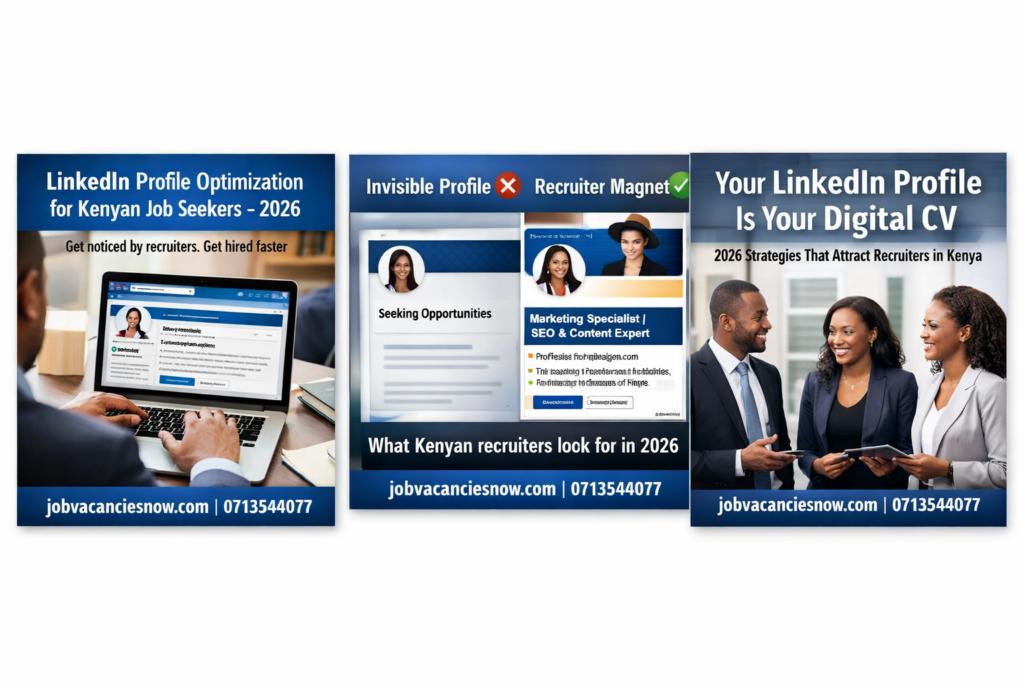
Your LinkedIn headline is the single most important element of your profile. It appears everywhere: in search results, connection requests, comments you make, and articles you share. Yet most Kenyan professionals waste this precious real estate with bland descriptions like “Seeking opportunities” or simply listing their current job title.
Your headline has 220 characters to accomplish three critical goals: incorporate keywords recruiters search for, communicate your unique value proposition, and compel viewers to click through to your full profile. A powerful headline formula that works consistently combines your role, specialty, and outcome you deliver.
Instead of “Accountant at ABC Company,” transform it to “Certified Public Accountant | IFRS Expert | Helping Kenyan SMEs Achieve Financial Compliance & Growth.” Rather than “Marketing Professional,” upgrade to “Digital Marketing Strategist | SEO & Content Marketing Specialist | Driving 300% ROI for East African Brands.” Replace “Software Developer” with “Full-Stack Software Engineer | Python, React & Cloud Solutions | Building Scalable Applications for Fintech.”
Notice how these examples incorporate searchable keywords while simultaneously communicating specialization and value. When recruiters search for “IFRS accountant Kenya” or “Python developer Nairobi,” these profiles appear prominently. Your headline should make someone think, “This is exactly the person we need.”
Writing a Compelling About Section That Converts Viewers to Connections
Your About section (formerly Summary) is your elevator pitch on steroids. You have 2,600 characters to tell your professional story in a way that resonates with recruiters and potential employers. This section should not read like a boring CV regurgitation. Instead, it should engage readers emotionally while demonstrating your expertise and value.
Start with a hook that captures attention immediately. “I’ve helped fifteen Kenyan startups secure over KES 200 million in venture funding” is far more compelling than “I am a business consultant with five years of experience.” Your opening sentence should make recruiters want to read more.
Structure your About section strategically. Begin with your professional identity and what drives you. “As a cybersecurity specialist passionate about protecting Kenya’s growing fintech sector from emerging threats, I’ve dedicated my career to building robust security frameworks for financial institutions across East Africa.” This immediately establishes expertise, passion, and geographic relevance.
Follow with your specific expertise and achievements. Use concrete numbers and outcomes. “Over the past seven years, I’ve implemented security protocols for twelve financial institutions, preventing over KES 450 million in potential fraud losses and ensuring 100% compliance with CBK regulations.” Quantified achievements transform vague claims into credible proof.
Include keywords naturally throughout this section. If you’re targeting UN jobs, mention “international development,” “program management,” “donor reporting,” and “capacity building.” For software engineering roles, weave in your technical stack: “JavaScript,” “AWS,” “microservices architecture,” “agile methodologies.” These keywords function like magnets for recruiter searches.
End with a clear call to action. “I’m currently exploring opportunities to bring my cybersecurity expertise to organizations serious about protecting their digital assets. Let’s connect to discuss how I can contribute to your security objectives.” This invites engagement and signals your availability.
Optimizing Your Experience Section for Maximum Impact
Many Kenyan professionals treat their LinkedIn Experience section as a simple copy-paste from their CV. This is a critical mistake. LinkedIn’s format allows for much richer storytelling than traditional CVs, and recruiters expect to see more detailed narratives here.
For each position, your job title should be clear and keyword-rich. If your official title was “Associate,” but you functioned as a “Project Manager,” use “Project Manager (Associate)” to ensure searchability. Your company description matters too—if you worked for a lesser-known Kenyan company, add context: “Leading logistics company serving East Africa’s manufacturing sector with annual revenue of KES 2 billion.”
Your role descriptions should focus on achievements rather than responsibilities. Transform “Responsible for managing social media accounts” into “Grew Instagram following from 2,000 to 47,000 in 18 months, generating KES 3.2 million in e-commerce sales through strategic content and influencer partnerships.” The difference is dramatic.
Use bullet points for readability, but make each one substantive. Start with strong action verbs: spearheaded, architected, negotiated, transformed, launched, optimized. Follow with specific actions and quantifiable outcomes. “Spearheaded digital transformation initiative that reduced operational costs by 34% (KES 8.6 million annually) while improving customer satisfaction scores from 67% to 89%.”
For those seeking opportunities similar to what’s discussed in guides about UN and NGO jobs in Kenya, emphasize project management experience, cross-cultural collaboration, donor reporting, and measurable development outcomes. For technology professionals exploring software engineer positions, showcase specific technologies, architectures you’ve built, and business problems you’ve solved through code.
Strategic Skills Selection and Endorsements
LinkedIn allows you to list up to fifty skills, but the top three skills receive the most visibility. Choose these three carefully based on what recruiters in your target industry search for most frequently. For a data analyst, these might be “Data Analysis,” “Python,” and “SQL.” For a human resources professional: “Talent Acquisition,” “HR Strategy,” and “Performance Management.”
Arrange your remaining skills strategically, prioritizing those most relevant to your target roles. Remove outdated or irrelevant skills ruthlessly. Having “Microsoft Office” listed when you’re a senior cloud architect dilutes your expertise and makes you appear out of touch.
Endorsements matter because they provide social proof of your skills. Actively seek endorsements from colleagues, managers, and clients who can credibly vouch for your abilities. Reciprocate by endorsing others genuinely—this often prompts them to endorse you in return. However, focus on quality over quantity. Twenty endorsements from recognized professionals in your industry carry more weight than two hundred from random connections.
Building a Strategic Network That Generates Opportunities
Your LinkedIn network should be cultivated intentionally, not grown randomly. Quality connections matter far more than quantity. A network of five hundred relevant professionals in your industry who regularly engage with your content creates more opportunities than five thousand random connections who never interact.
Connect with recruiters who specialize in your field. In Kenya, identify recruiters at firms like Corporate Staffing, Manpower Kenya, CV People Africa, and international firms operating locally. Personalize every connection request. “Hi Sarah, I noticed you specialize in placing finance professionals in Kenya’s banking sector. I’m a CPA with eight years in commercial banking and would value connecting to stay informed about opportunities in this space.”
Connect with professionals at companies you aspire to work for. If you’re targeting Safaricom, Equity Bank, or KCB, build connections with employees in departments relevant to your expertise. Engage meaningfully with their posts before requesting to connect. Comment thoughtfully on their articles, share their content with your insights, and demonstrate genuine interest in their work.
Join and actively participate in relevant LinkedIn groups. Groups like “Kenya Professionals Network,” “Nairobi Tech Community,” “Kenya Finance Professionals,” and industry-specific groups provide opportunities to demonstrate expertise, learn about unadvertised opportunities, and build relationships with decision-makers.
Content Strategy: Becoming Visible Through Regular Engagement
Passive LinkedIn profiles rarely generate opportunities. Active profiles that regularly share insights, engage with others’ content, and demonstrate thought leadership consistently attract recruiter attention and job opportunities. You don’t need to become a full-time content creator, but strategic activity makes an enormous difference.
Share content at least twice weekly. This could be industry news with your commentary, lessons learned from recent projects, professional achievements, or insights on trends affecting your sector. For example, a software developer might share: “Just completed migrating our entire infrastructure to Kubernetes. Here are three critical lessons about container orchestration that every Kenyan tech team should know…” Then detail those lessons.
Comment meaningfully on posts from influencers and professionals in your industry. Generic comments like “Great post!” add no value. Instead, contribute substantive insights: “This aligns with what we experienced during our digital transformation. We found that employee training was actually more critical than the technology itself. What’s your view on the human element of these initiatives?”
Celebrate professional milestones publicly. When you complete certifications, finish major projects, or achieve significant results, share these accomplishments. “Proud to share that our team just completed Kenya’s first blockchain-based supply chain solution for the agricultural sector, helping 2,000 smallholder farmers access better market prices through transparent traceability.” This showcases achievement while demonstrating expertise.
Publishing long-form articles on LinkedIn establishes thought leadership and improves your search visibility dramatically. Articles on topics like “The Future of Fintech Regulation in Kenya” or “How AI is Transforming Customer Service in East Africa” position you as an expert and appear in searches far beyond your immediate network.
Profile Completeness: The Details That Matter
LinkedIn rewards complete profiles with higher search rankings. Ensure every section is populated thoroughly. Add your education, including institutions, degrees, and graduation years. List relevant certifications, especially those valued in your industry like CPA, ACCA, PMP, AWS certifications, or Google Analytics qualifications.
Request recommendations from former supervisors, colleagues, and clients. Recommendations provide powerful social proof and credibility. Aim for at least three recommendations, ensuring they speak to different aspects of your professional competence. Guide recommenders by suggesting they mention specific projects or outcomes you achieved together.
Add media to your profile. If you’ve created presentations, written reports, designed graphics, or built products, showcase these in your Featured section and throughout your Experience entries. Visual elements make your profile more engaging and provide concrete evidence of your capabilities.
Your profile photo matters significantly. Use a professional, high-quality headshot with good lighting against a neutral background. You should be smiling, dressed professionally, and making eye contact. Profiles with professional photos receive fourteen times more views than those without. Your banner image provides additional branding opportunity—use it to reinforce your professional identity or showcase your work.
Leveraging LinkedIn for Specific Career Goals
Your LinkedIn strategy should align with your specific career objectives. For those pursuing government positions and KRA careers, emphasize public sector experience, regulatory knowledge, policy work, and measurable impacts on governance or public service delivery. Connect with current government employees and follow relevant ministries and agencies.
Professionals seeking remote work opportunities should explicitly state “Open to remote work” in your headline and settings. Highlight experience with remote collaboration tools, self-management capabilities, and outcomes delivered in distributed team environments. Connect with remote-first companies and recruiters specializing in remote placements.
For those building passive income streams alongside traditional employment, LinkedIn can generate freelance clients and consulting opportunities. Position yourself as an expert available for consulting, speaking, or advisory work. Share case studies of results you’ve delivered and make your availability for project-based work clear.
Advanced LinkedIn Features Worth Exploring
LinkedIn Premium Career offers significant advantages for serious job seekers. The ability to see who’s viewed your profile helps you understand which recruiters are checking you out. InMail credits let you message recruiters and hiring managers directly, even if you’re not connected. The “Featured Applicant” badge makes your applications stand out. Salary insights help you negotiate better compensation. For job seekers actively pursuing opportunities, the investment often pays for itself with a single placement.
LinkedIn Learning provides thousands of professional development courses that appear on your profile upon completion. Taking courses relevant to skills you want to develop signals proactive professional growth to recruiters. Courses in emerging technologies, leadership, project management, or industry-specific skills demonstrate commitment to continuous learning.
Creator mode, when enabled, transforms your profile to emphasize your content and followership. This works well for professionals building thought leadership in their fields. However, it reduces emphasis on your work experience, so consider your priorities before enabling it.
Common LinkedIn Mistakes Kenyan Professionals Must Avoid
Many of the same mistakes that plague CVs also damage LinkedIn profiles. Having an incomplete profile signals lack of seriousness and attention to detail. Using a casual or unprofessional photo undermines credibility. Writing generic descriptions without specific achievements makes you forgettable among hundreds of similar profiles. If you’re making critical mistakes on your CV, you’re likely replicating them on LinkedIn. Review guidance on CV mistakes that keep Kenyan job seekers unemployed and ensure you’re not making parallel errors on your LinkedIn profile.
Connecting indiscriminately with everyone dilutes your network’s value and can make you appear desperate or spam-like. Never send connection requests without personalized messages, especially to recruiters and senior professionals. Broadcasting your job search too publicly by changing your headline to “Seeking opportunities” or posting desperate pleas for jobs often backwires by making you appear undesirable or unemployed for problematic reasons.
Neglecting to engage with your network means missed opportunities. LinkedIn’s algorithm rewards active users with greater visibility. Letting your profile sit dormant for months means recruiters are unlikely to see you even when you match their search criteria perfectly.
Measuring Your LinkedIn Success
Track specific metrics to gauge your profile’s effectiveness. Monitor your profile views weekly—increasing views indicate improved visibility. Check your search appearances to understand which keywords are driving traffic to your profile. Review your social selling index (SSI) score, which LinkedIn calculates based on your professional brand, finding the right people, engaging with insights, and building relationships.
Most importantly, track outcomes: connection requests from recruiters, InMail messages about opportunities, interview requests, and actual job offers generated through LinkedIn. These ultimate metrics reveal whether your profile is truly working.
Creating Your LinkedIn Action Plan
Transform your LinkedIn profile systematically over the next two weeks. Dedicate thirty minutes daily to implementing these strategies. Day one and two: rewrite your headline and About section with keywords and compelling narratives. Day three and four: update all Experience entries with achievement-focused descriptions and quantified outcomes. Day five: optimize your skills section and request endorsements from five colleagues. Day six and seven: add media, recommendations, and complete all remaining sections.
Days eight through ten: identify and connect with fifty relevant professionals, personalizing every request. Days eleven through thirteen: join five industry groups and engage meaningfully with content. Day fourteen: publish your first article or insight post demonstrating your expertise. Then maintain momentum with regular weekly engagement, content sharing, and network expansion.
Conclusion: Your LinkedIn Profile as a Career Accelerator
In Kenya’s evolving job market, your LinkedIn profile functions as your always-on career ambassador, working to connect you with opportunities even when you’re not actively looking. An optimized profile attracts recruiters, generates inbound opportunities, and positions you as the obvious choice when roles in your field become available.
The strategies outlined in this guide have helped thousands of Kenyan professionals transform their LinkedIn presence from invisible to magnetic. The question isn’t whether LinkedIn optimization works—it’s whether you’re willing to invest the focused effort required to stand out in a crowded marketplace.
Start today. Two weeks of dedicated effort can create a LinkedIn profile that generates opportunities for years to come. Your next career breakthrough might be just one profile view away—make sure that when it comes, your profile converts that view into a conversation and that conversation into an offer.